Alle indlæg af urtehave_com

tape-description

Tapening


Type: KNEE STABILISING BANDAGE:

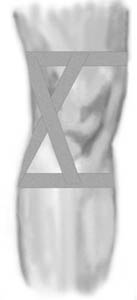
Objective: To control the movement of the kneecap so that it glides up and down in a direct line. The tape should immediately provide less pain, and is a good indicator of whether the patient will gain any benefit of a kneecap stabilising bandage.

Application: The knee should be held slightly bent when applying the tape. One anchor is applied above the knee and one below (A & B), and should be open to the rear. A strip is applied (C) over the kneecap’s lower outer half, so that half the tape is over the kneecap. The tape is in line with the edge of the kneecap, and in this way has a sloping course, lifting and pushing the kneecap slightly inwards. The second strip (D) is applied over the kneecap’s upper outer half, so that half the tape is over the kneecap and runs slanting downwards over the first strip. Finish with further strips on top of the anchors A & B.

bandage-article1

SportNetDoc

Effect of a patellar realignment brace on patients with patellar subluxation and dislocation. Evaluation with kinematic magnetic resonance imaging.

Muhle C, Brinkmann G, Skaf A, Heller M, Resnick D. Am J Sports Med 1999 May-Jun;27(3):350-3.

The object of this study was to evaluate the effect of a patellar realignment brace on patients with patellar subluxation or dislocation. Twenty-one patients (24 patellofemoral joints) with clinical evidence of patellar subluxation (N = 16) or dislocation (N = 5) were examined with the joint inside a positioning device to allow active-motion, kinematic magnetic resonance imaging. To analyze the patellar tracking pattern, the same imaging parameters (patellar tilt angle, bisect offset, and lateral patellar displacement) and section locations were used before and after application of a patellar realignment brace. No statistically significant differences were found in any of the three parameters for the patellofemoral relationships before or after wearing the patellar brace. The results indicated no stabilizing effect of the tested brace in patients with patellar subluxation or dislocation during active joint motion.

treatment-article2

SportNetDoc

Operative versus closed treatment of primary dislocation of the patella. Similar 2-year results in 125 randomized patients.

Nikku R, Nietosvaara Y, Kallio PE, Aalto K, Michelsson JE. Acta Orthop Scand 1997 Oct;68(5):419-23.

To assess whether initial surgery is beneficial for patients with primary dislocation of the patella, we carried out a prospective randomized study. Knee stability was examined under anesthesia, and associated injuries were excluded by diagnostic arthroscopy. 55 patients then had closed treatment and 70 patients were operated on with individually adjusted proximal realignment procedures. Surgery gave no benefit based on 2 years of follow-up. The subjective result was better in the non-operative group in respect of mean Houghston VAS knee score (closed 90, operative 87), but similar in terms of the patient’s own overall opinion and mean Lysholm II knee score. Recurrent instability episodes (redislocation or recurrent subluxation) occurred in 20 nonoperated and in 18 operated patients. Of these, 15 and 12, respectively, then suffered redislocations. Function was better after closed treatment. Serious complications occurred after surgery in 4 patients. In conclusion, the recurrence of patellar dislocation may be more frequent than reported, whatever the form of treatment. Routine operative management cannot be recommended for primary dislocation of the patella.

treatment-article1

SportNetDoc

Acute and chronic patella dislocations. Therapeutic strategies in Danish orthopedic departments.

Johannsen HG, Gad D, Heidemann ED. Ugeskr Laeger 2000 Aug 21;162(34):4523-5.

BACKGROUND.
In review of the literature there is no standard treatment of acute- as well as recurrent dislocation of the patella. Most investigations are retrospective or not randomised. Approximately 1500 patients/year with the diagnosis luxatio patellae are seen in Danish hospitals.

METHODS.
Using a questionnaire we wished to find out how these patients were treated in Danish orthopaedic departments.

RESULTS.
We found that there was no consensus on the treatment of patellar dislocation.

CONCLUSION.
We concluded that there is a need for prospective randomised studies involving a large number of patients, with a long follow up time.

examination-article1

SportNetDoc

Subluxation of the patella: evaluation of patellar articular cartilage with MR imaging.

Nakanishi K, Inoue M, Harada K, Ikezoe J, Murakami T, Nakamura H, Kozuka T. Br J Radiol 1992 Aug;65(776):662-7.

In patients with subluxation of the patella, injury of the patellar articular cartilage is frequently observed, and correct evaluation of this cartilage injury is extremely important for the management of these patients. Magnetic Resonance (MR) studies were performed on 102 patellofemoral (PF) joints of 51 patients with subluxation of the patella and 20 PF joints of 10 healthy volunteers. In 77 of the 102 PF joints with subluxation, arthroscopy and/or operation were performed. MR images were obtained with spin-echo and FLASH sequences, and para-axial images were obtained. We retrospectively analysed the MR findings of the 77 joints with special attention to the surface and thickness of the cartilage, and classified them into four grades. These MR grades were compared with the grades on arthroscopy, and the following results were obtained: MR grade 0, normal cartilage (n = 27, sensitivity 90.9%, specificity 74.2%); MR grade 1, thickening of the cartilage (n = 24, sensitivity 50%, specificity 89.1%); MR grade, surface irregularity of the cartilage (n = 20, sensitivity 85%, specificity 94.7%); MR grade 3, loss of the cartilage (n = 6, sensitivity 100%, specificity 100%). Although the early changes observed by arthroscopy were underestimated from the MR images, MR imaging proved to be extremely useful for evaluating moderately or advanced patellar cartilage injury.